Speak to the CEO of a technology platform and they will tell you a crisis moved their business years ahead in a couple of months. For everyone not running a platform, the same period felt overwhelming: hard business problems, people problems, and simple things made complex. The question is whether there is a way to a new, easier normal. There is, and it does not start with a vendor.
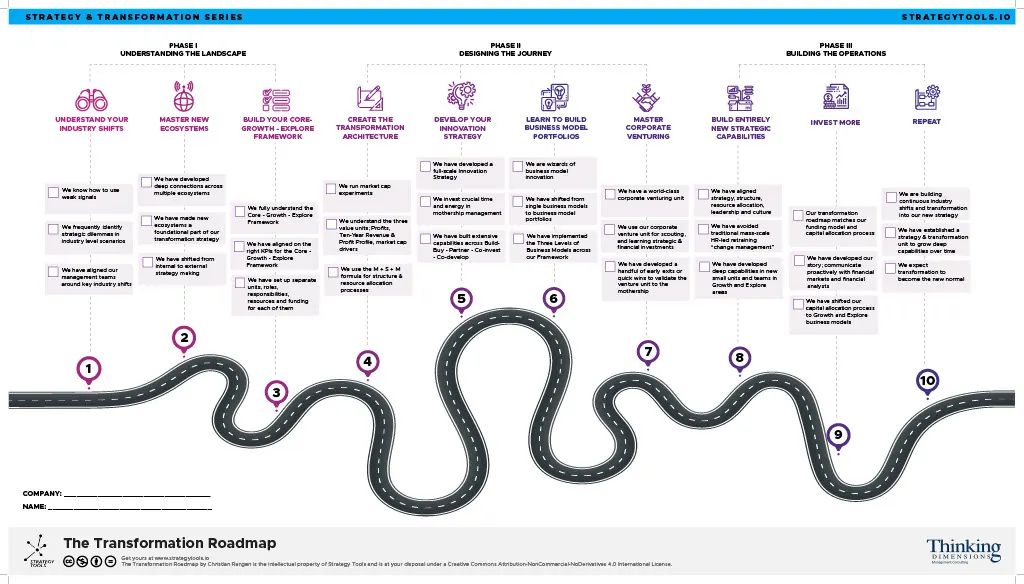
Digital transformation is possibly the most overhyped topic since Y2K, when the big IT houses made billions on doomsday predictions. I recall a hotel chain CEO who had been told he needed to replace every alarm clock in every room in the world before midnight. The planes did not fall out of the sky. Transformation is similar: you can do it without trashing your company or firing your customers. What you need is a roadmap, and the roadmap has to start inside.
Why outside-in programmes fail
Any strategic change must begin with your people and their thinking. The outside adviser who promises to bring the change alone rarely does, which is why more than 80% of strategic change programmes fail: a beautiful, expensive deck that managers were somehow meant to implement. There is a better way, and my partners and I have proven it repeatedly. Build the strategic capability in your own team and confront the big questions together: which customers you serve, which priorities come first, where the industry is moving and how you get ahead of it, and how you read the weak signals from competitors and customers that change your products, markets and capabilities.
Five pieces of advice that have held up
Look for quick wins. Start with smaller projects. Identify the specific pain your customers feel and fix that first. Invest in training and in process rather than buying a solution from an agency. Develop internal capability, because the next transformation is already on its way.
Then and now
Written in 2020, when "digital" was the word. The word is now "AI," and the advice is unchanged. In the MOVE® system the transformation question is never asked on its own; it is asked as a scenario against the current strategy: which assumption about advantage does this technology break, which product-market does it open or close, which capability must we build or buy. Answered that way, a transformation is a set of decisions with owners. Asked the other way, it is a deck.
Monday
List the three digital or AI projects currently funded in your company. Beside each, write the product-market it serves and the customer pain it removes. A project with a blank beside it is a technology looking for a strategy.